General Liability vs Professional Liability Insurance
Understand the critical differences between general liability vs professional liability insurance. This guide helps business owners determine which coverage they need based on their specific risks, with side-by-side comparisons and industry recommendations.
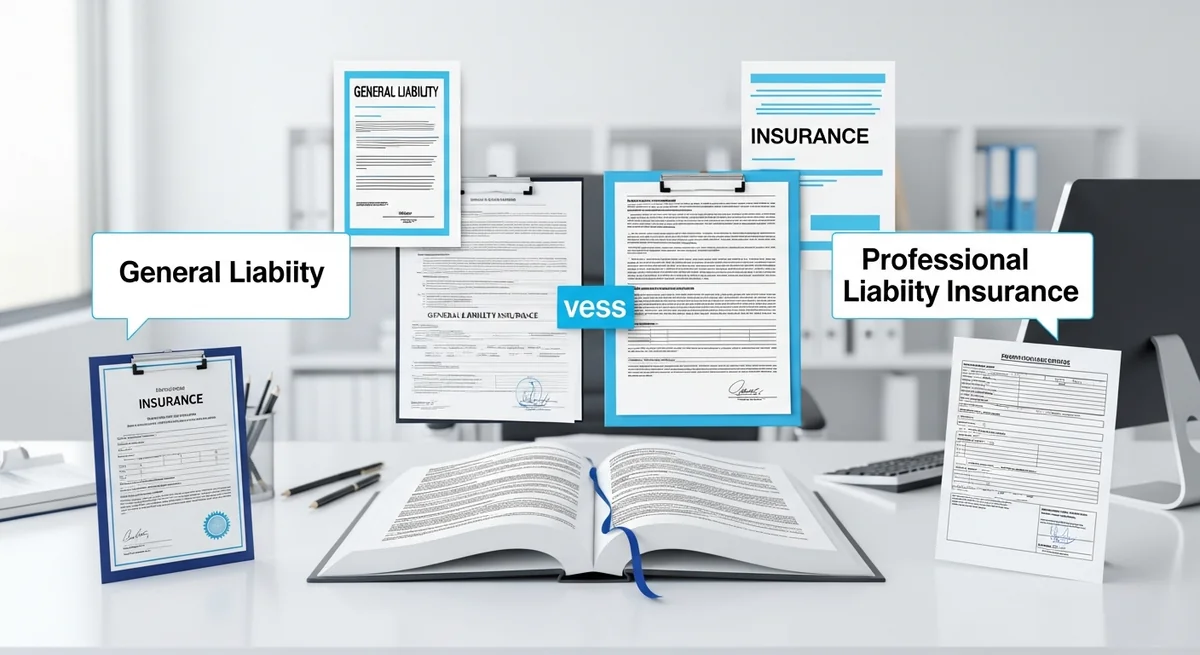
Quick Comparison Overview
This comprehensive comparison helps you understand the key differences and make an informed decision for your insurance compliance needs.
General Liability vs Professional Liability Insurance: Which Coverage Does Your Business Need?
When protecting your business, understanding the difference between general liability vs professional liability insurance is crucial. These two fundamental types of business insurance serve different purposes, cover distinct risks, and can mean the difference between financial security and devastating losses. Whether you're a contractor, consultant, retail store owner, or service provider, choosing the right coverage requires understanding how these policies work and what they protect.
In this comprehensive guide, we'll break down general liability vs professional liability insurance, examine their key differences, and help you determine which coverage—or combination of coverages—best suits your business needs. By the end, you'll have a clear framework for making an informed insurance decision that properly protects your company's assets and future.
General Liability Insurance: The Foundation of Business Protection
General liability insurance serves as the cornerstone of business protection, covering physical risks and third-party claims that can arise during normal business operations. This fundamental coverage helps safeguard businesses against financial losses from bodily injuries, property damage, and advertising injuries.
What General Liability Insurance Covers
Bodily injury to non-employees – If a customer slips and falls in your store, general liability covers their medical expenses and your legal defense if they sue.
Property damage – If your employee accidentally damages a client's property while performing work, your general liability policy would cover repair or replacement costs.
Personal and advertising injury – Covers claims of libel, slander, copyright infringement, and false advertising.
Legal defense costs – Pays for attorneys, court costs, and settlements related to covered claims.
Real-World Scenario: General Liability in Action
A plumbing contractor visits a client's home to fix a leaky pipe. While working, the plumber accidentally knocks over an expensive vase, breaking it. Later that day, a homeowner trips over the plumber's toolbox, suffering a broken wrist. General liability insurance would cover both the property damage (the broken vase) and the bodily injury claim (medical expenses for the broken wrist).
Businesses That Need General Liability Insurance
General liability insurance is essential for virtually every business, but especially for:
Retail stores with physical locations customers visit
Contractors who work on client properties
Restaurants and food service businesses
Event planners and venue operators
Manufacturing companies
Professional Liability Insurance: Protection for Service Errors
While general liability covers physical risks, professional liability insurance (also known as errors and omissions or E&O insurance) protects against claims of negligence, mistakes, or inadequate work in your professional services. This coverage addresses the intellectual and service-based risks that many businesses face.
What Professional Liability Insurance Covers
Professional negligence – Claims that you failed to perform your professional duties according to industry standards.
Errors and omissions – Mistakes or oversights in your work that cause financial harm to clients.
Misrepresentation – Claims that you misrepresented your services or made inaccurate statements.
Breach of contract – Allegations that you failed to deliver services as promised in a contract.
Legal defense costs – Covers attorney fees, court expenses, and settlements related to covered claims.
Real-World Scenario: Professional Liability in Action
An accountant prepares tax returns for a business client but misses a significant deduction opportunity, resulting in the client overpaying taxes by $15,000. The client discovers this error the following year and sues the accountant for negligence. Professional liability insurance would cover the accountant's legal defense costs and any settlement or judgment up to the policy limits.
Businesses That Need Professional Liability Insurance
Professional liability insurance is particularly important for:
Consultants and advisors
Accountants and financial professionals
IT service providers and software developers
Architects and engineers
Healthcare providers (malpractice insurance is a specialized form of professional liability)
Real estate professionals
Marketing and advertising agencies
General Liability vs Professional Liability: Side-by-Side Comparison
Understanding the key differences between general liability vs professional liability insurance helps clarify which policy—or combination of policies—your business needs. Here's a comprehensive comparison:
Primary Protection Focus
General Liability: Physical risks (bodily injury, property damage) and advertising injuries
Professional Liability: Financial and intellectual risks (errors, negligence, inadequate work)
Claims Trigger
General Liability: Physical accidents, damage events, or advertising missteps
Professional Liability: Alleged mistakes or failures in professional services
Policy Structure
General Liability: Typically occurrence-based (covers incidents that occur during the policy period, regardless of when claims are filed)
Professional Liability: Usually claims-made (covers claims filed during the policy period, even if the incident occurred earlier)
Cost Factors
General Liability: Based on business size, industry risk level, location, claims history, and coverage limits
Professional Liability: Based on profession type, services offered, revenue, number of employees, claims history, and coverage limits
Typical Annual Premium Range
General Liability: $400-$1,500 for small businesses (varies significantly by industry)
Professional Liability: $500-$3,000 for small professional service firms (higher for high-risk professions)
Requirement Status
General Liability: Often required by landlords, clients, and for some business licenses
Professional Liability: Required in certain professions (healthcare, legal) and often by clients in service contracts
Pros and Cons: General Liability vs Professional Liability
When comparing general liability vs professional liability insurance, it's important to understand the advantages and limitations of each type of coverage.
General Liability Insurance
Pros:
Broad protection against common physical risks
Often more affordable than specialized policies
Typically includes advertising injury coverage
Occurrence-based policies provide long-term protection
Cons:
Doesn't cover professional errors or negligence
No protection for financial damages from poor advice
Doesn't cover employee injuries (that's workers' compensation)
May have significant exclusions for certain industries
Professional Liability Insurance
Pros:
Specialized protection for service-based businesses
Covers financial losses from errors and omissions
Protects against negligence claims
Can be customized for specific professions
Cons:
Doesn't cover bodily injury or property damage claims
Claims-made policies may leave gaps in coverage
Often more expensive for high-risk professions
May require tail coverage when changing insurers
Which Should You Choose? A Decision Framework
When deciding between general liability vs professional liability insurance—or determining if you need both—consider these key factors:
Business Type Assessment
Physical product businesses (retail, manufacturing, restaurants) – General liability is essential; professional liability may be unnecessary unless you also provide consulting services.
Service-based businesses (consultants, designers, financial advisors) – Professional liability is critical; general liability is still important if you have a physical office or meet with clients.
Hybrid businesses (contractors who both advise and perform physical work) – Both policies are typically necessary for complete protection.
Risk Analysis Questions
Ask yourself these questions to determine your insurance needs:
Do clients or customers visit your business premises? (If yes, general liability is important)
Do you work at client locations? (If yes, general liability is important)
Do you provide professional advice or services? (If yes, professional liability is important)
Could your advice or services cause financial harm if performed incorrectly? (If yes, professional liability is important)
Do clients require either policy in their contracts? (If yes, obtain the required coverage)
Industry-Specific Recommendations
IT Professionals: Both policies recommended. Professional liability covers coding errors or system failures; general liability covers physical damage to client equipment or injuries at your office.
Contractors: Both policies recommended. General liability covers property damage and injuries; professional liability covers design or consultation errors.
Retailers: General liability is essential; professional liability only needed if offering specialized advice.
Financial Advisors: Professional liability is critical; general liability needed if clients visit your office.
Cost-Benefit Considerations
When evaluating general liability vs professional liability insurance costs:
Consider the financial impact of a potential claim without insurance
Look for bundled policies (Business Owner's Policy) that may offer discounted rates
Adjust deductibles to balance premium costs against out-of-pocket expenses
Remember that insurance premiums are generally tax-deductible business expenses
Frequently Asked Questions About General Liability vs Professional Liability
Can a business operate with only general liability insurance?
Yes, some businesses can operate with only general liability insurance, particularly those that don't provide professional advice or services. Retail stores, restaurants, and manufacturing companies often prioritize general liability insurance because they face primarily physical risks like customer injuries or property damage. However, any business that provides advice, makes recommendations, or performs professional services should strongly consider professional liability coverage to protect against claims of errors or negligence in their work.
What happens if I need both general liability and professional liability insurance?
Many businesses need both general liability and professional liability insurance for comprehensive protection. You can purchase these policies separately or look for bundled options. Some insurers offer package policies like a Business Owner's Policy (BOP), which typically includes general liability plus property insurance, and then add professional liability as an endorsement. Alternatively, you can purchase standalone policies from different insurers. Working with an insurance broker who specializes in business insurance can help you find the most cost-effective combination for your specific needs.
How do coverage limits work for liability insurance policies?
Liability insurance policies typically have two main coverage limits: per-occurrence and aggregate limits. The per-occurrence limit is the maximum amount the insurer will pay for any single claim, while the aggregate limit is the total amount the insurer will pay for all claims during the policy period (usually one year). For example, a policy with $1 million/$2 million limits means the insurer will pay up to $1 million for any single claim and up to $2 million total for all claims during the policy period. When selecting limits, consider your business's risk exposure, asset value, and any contractual requirements from clients or landlords.
Are there industry-specific versions of professional liability insurance?
Yes, many industries have specialized forms of professional liability insurance tailored to their specific risks. For example, medical professionals need malpractice insurance, attorneys need legal malpractice insurance, and real estate agents need errors and omissions (E&O) insurance. These specialized policies cover the unique risks faced in each profession and often include industry-specific coverage features. Technology companies might need cyber liability coverage, while architects and engineers require professional liability policies that address design errors. Always look for insurers with experience in your specific industry to ensure you're getting appropriate coverage.
How does the claims process differ between general liability and professional liability insurance?
The claims process differs significantly between general liability and professional liability insurance. General liability claims often involve immediate, tangible incidents like customer injuries or property damage, which should be reported to your insurer promptly with documentation of the incident. Professional liability claims, however, may emerge months or years after you provided the service, often beginning with a letter alleging negligence or errors in your work. Professional liability claims typically involve more complex investigations, expert testimony, and longer resolution timelines. Both types of insurance provide legal defense, but professional liability cases often require specialized attorneys with expertise in your field.
Conclusion: Making the Right Choice Between General Liability vs Professional Liability
When comparing general liability vs professional liability insurance, the right choice depends on your business's specific risks, activities, and client requirements. Many businesses need both types of coverage for comprehensive protection, while others may prioritize one over the other based on their primary risk exposures.
General liability insurance forms the foundation of business protection, covering physical risks like bodily injuries and property damage that can occur during normal operations. Professional liability insurance provides essential coverage for service-based businesses, protecting against claims of errors, omissions, or negligence in your professional work.
Rather than viewing these policies as an either/or decision, consider how they complement each other to provide comprehensive protection for your business. Work with an experienced insurance professional who can help assess your specific risks and recommend appropriate coverage options.
Managing your business insurance policies is just one aspect of maintaining compliance and protecting your company. For organizations that handle certificates of insurance from vendors, contractors, or tenants, automating COI tracking can save time and reduce risk.
Start your free trial of CoverLedger today to streamline your certificate of insurance management process and ensure your business partners maintain appropriate liability coverage.
Quick Reference
Choose the Smarter Solution
See why insurance professionals are switching to automated COI tracking.