Building a Comprehensive Risk Management Strategy
Building a comprehensive risk management strategy protects your business from financial losses, operational disruptions, and legal liabilities. Whether you manage vendors, contractors, or complex supply chains, a structured approach to identifying, assessing, and mitigating risks is essential for long-term success. This guide walks you through every step of creating a risk management framework that safeguards your organization while supporting growth and compliance objectives.
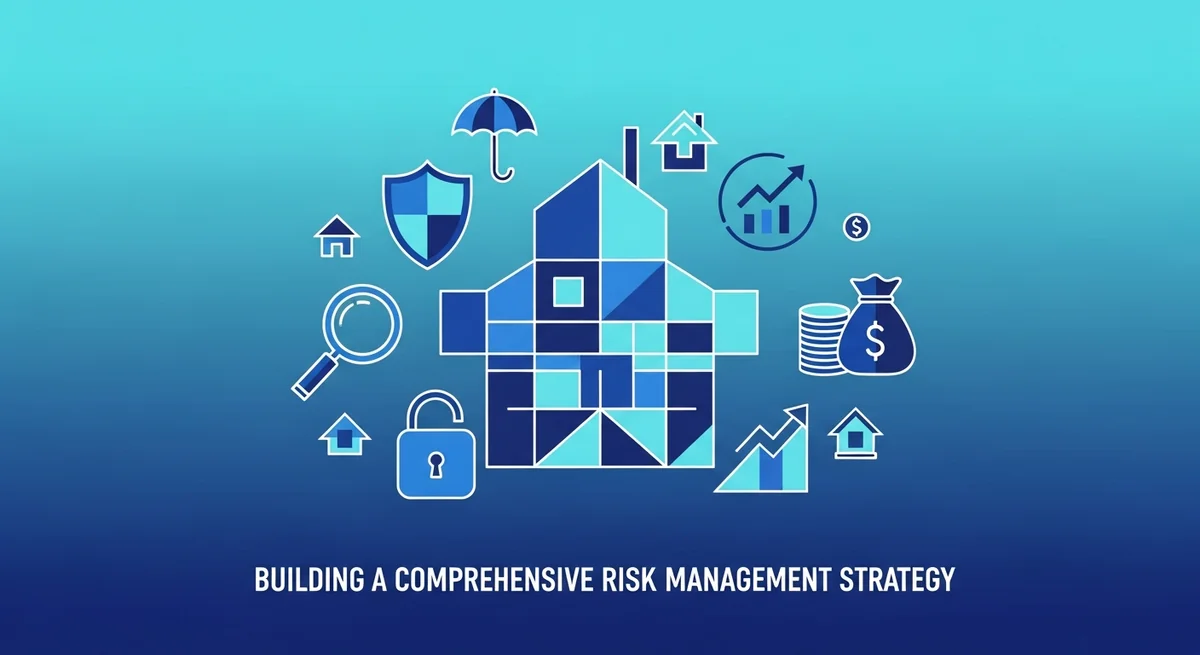
Building a Comprehensive Risk Management Strategy: Complete Guide
Building a comprehensive risk management strategy protects your business from financial losses, operational disruptions, and legal liabilities. Whether you manage vendors, contractors, or complex supply chains, a structured approach to identifying, assessing, and mitigating risks is essential for long-term success. This guide walks you through every step of creating a risk management framework that safeguards your organization while supporting growth and compliance objectives.
You'll learn how to establish risk management foundations, implement systematic assessment processes, transfer risk through insurance and contracts, and avoid common pitfalls that leave businesses vulnerable. By the end, you'll have a practical roadmap for developing a strategy tailored to your organization's unique risk profile.
Table of Contents
- Understanding Risk Management Fundamentals
- Step-by-Step Risk Management Framework
- Best Practices for Risk Management Excellence
- Common Risk Management Mistakes to Avoid
- Key Takeaways
- Frequently Asked Questions
Understanding Risk Management Fundamentals
Risk management is the systematic process of identifying, analyzing, and responding to potential threats that could impact your business operations, finances, or reputation. A comprehensive risk management strategy doesn't eliminate all risks—that's impossible. Instead, it helps you understand which risks you face, prioritize them based on likelihood and impact, and choose appropriate responses.
The Four Core Risk Categories
Every business faces risks that fall into four main categories:
- Strategic risks: Market changes, competitive pressures, technology disruption, and business model vulnerabilities
- Operational risks: Process failures, supply chain disruptions, vendor performance issues, and system breakdowns
- Financial risks: Cash flow problems, credit exposure, currency fluctuations, and investment losses
- Compliance risks: Regulatory violations, contractual breaches, insurance gaps, and legal liabilities
Understanding these categories helps you organize your risk assessment efforts and ensure no major risk area gets overlooked when building a comprehensive risk management strategy.
The Five Risk Response Strategies
Once you identify and assess risks, you have five fundamental options for responding:
- Avoid: Eliminate the risk entirely by not engaging in the risky activity
- Reduce: Implement controls to decrease likelihood or impact
- Transfer: Shift risk to another party through insurance or contracts
- Accept: Acknowledge the risk and prepare to handle consequences
- Exploit: Intentionally take on calculated risks for strategic advantage
Most comprehensive risk management strategies use a combination of these approaches. For example, you might transfer major liability risks through insurance while implementing operational controls to reduce the likelihood of claims. Understanding contractual risk transfer mechanisms at Understanding Contractual Risk Transfer helps you effectively shift vendor-related risks to appropriate parties.
Why Insurance Plays a Central Role
Insurance represents one of the most powerful risk transfer mechanisms available to businesses. When building a comprehensive risk management strategy, insurance serves multiple critical functions beyond simple financial protection. It demonstrates due diligence to stakeholders, satisfies contractual requirements, and provides access to loss prevention resources from carriers.
The connection between certificates of insurance and loss prevention at The Connection Between Cois And Loss Prevention illustrates how proper insurance documentation supports broader risk management objectives. However, insurance alone doesn't constitute a complete strategy—it must integrate with operational controls, vendor management, and compliance processes.
Step-by-Step Risk Management Framework
Building a comprehensive risk management strategy requires a systematic approach. Follow these seven steps to create a framework that protects your organization while remaining practical to implement and maintain.
Step 1: Establish Risk Management Governance
Start by defining who owns risk management within your organization. This includes:
- Appointing a risk management leader or committee with clear authority
- Defining roles and responsibilities across departments
- Establishing reporting lines and escalation procedures
- Creating a risk management policy that documents your approach
- Securing executive sponsorship and budget allocation
Without clear governance, risk management efforts become fragmented and ineffective. Someone must have the authority to enforce standards, allocate resources, and drive accountability across the organization.
Step 2: Identify All Potential Risks
Conduct a thorough risk identification process using multiple methods:
- Brainstorming sessions with department leaders and frontline employees
- Historical incident and claims data analysis
- Industry benchmarking and peer comparison
- Process mapping to identify failure points
- External expert consultations and audits
Pay special attention to third-party risks from vendors, contractors, and service providers. Understanding third-party liability exposure at Understanding Third Party Liability Exposure helps you recognize how external relationships create risk that requires active management.
Document each identified risk with specific details: what could happen, how it could occur, who or what would be affected, and what the potential consequences might be. This creates a comprehensive risk inventory that becomes the foundation for your entire strategy.
Step 3: Assess and Prioritize Risks
Not all risks deserve equal attention. Assess each identified risk using two dimensions:
- Likelihood: How probable is this risk to occur? (Rate as low, medium, or high)
- Impact: What would be the consequences if it occurs? (Rate as minor, moderate, or severe)
Create a risk matrix that plots likelihood against impact. This visual tool helps you prioritize which risks need immediate attention versus which can be monitored over time. High-likelihood, high-impact risks demand immediate mitigation efforts. Low-likelihood, low-impact risks may simply require periodic monitoring.
Consider both quantitative factors (financial losses, downtime hours) and qualitative factors (reputation damage, employee morale, customer trust). Some risks carry consequences that extend far beyond immediate financial impact.
Step 4: Develop Risk Response Plans
For each prioritized risk, create a specific response plan that documents:
- Which response strategy you'll use (avoid, reduce, transfer, accept, or exploit)
- Specific actions required to implement the strategy
- Who is responsible for each action
- Timeline and milestones for implementation
- Budget and resources needed
- Success metrics to measure effectiveness
When building a comprehensive risk management strategy, risk transfer through insurance and contractual agreements typically addresses your most severe potential losses. Deciding between risk transfer vs risk retention strategies at Risk Transfer Vs Risk Retention Strategies helps you determine which risks to insure versus which to self-fund.
Step 5: Implement Controls and Safeguards
Execute your risk response plans by implementing specific controls:
Preventive controls reduce the likelihood of risks occurring. Examples include employee training programs, equipment maintenance schedules, cybersecurity measures, and vendor pre-qualification processes.
Detective controls help you identify when risks materialize. Examples include monitoring systems, regular audits, exception reports, and compliance reviews. Understanding insurance compliance audits at Understanding Insurance Compliance Audits helps you establish detective controls for insurance-related risks.
Corrective controls minimize damage after a risk event occurs. Examples include business continuity plans, incident response procedures, backup systems, and crisis communication protocols.
Layer multiple control types for critical risks. A single control failure shouldn't leave you completely exposed.
Step 6: Monitor and Measure Performance
Establish key risk indicators (KRIs) that provide early warning signals when risks are increasing. Track metrics such as:
- Number of incidents or near-misses by category
- Insurance claims frequency and severity
- Vendor compliance rates with insurance requirements
- Control effectiveness test results
- Time to resolve risk-related issues
- Percentage of identified risks with active mitigation plans
Create a risk dashboard that provides leadership with visibility into your risk profile. Schedule regular risk reviews—quarterly at minimum—to assess whether your strategy remains effective as business conditions evolve.
Step 7: Review and Update Regularly
Risk management is not a one-time project. Your comprehensive risk management strategy must evolve as your business grows, markets shift, and new threats emerge. Schedule formal reviews at least annually, but also trigger updates when:
- You launch new products, services, or enter new markets
- Significant incidents occur that expose gaps
- Regulatory requirements change
- Major organizational changes happen (mergers, restructuring)
- Industry trends indicate emerging risks
Document lessons learned from incidents and near-misses. These real-world experiences provide invaluable insights for strengthening your risk management approach.
Best Practices for Risk Management Excellence
Following these proven practices will strengthen your comprehensive risk management strategy and improve outcomes.
Integrate Risk Management Into Daily Operations
The most effective risk management doesn't exist as a separate program—it becomes embedded in how your organization operates. Build risk considerations into existing processes like project planning, vendor selection, contract negotiation, and performance reviews. When employees naturally consider risks as part of their regular work, you achieve far better results than treating risk management as an occasional compliance exercise.
For example, creating a vendor risk assessment framework at Creating A Vendor Risk Assessment Framework ensures that risk evaluation happens systematically during vendor onboarding rather than as an afterthought.
Foster a Risk-Aware Culture
Culture drives behavior more powerfully than policies. Create an environment where employees feel comfortable reporting risks, near-misses, and concerns without fear of blame. Recognize and reward proactive risk identification. Share risk information openly rather than hiding problems.
Leadership must model risk-aware behavior. When executives consistently consider risks in decisions and communicate about risk management priorities, the entire organization follows their example.
Leverage Technology for Efficiency
Manual risk management processes don't scale. As your business grows, spreadsheets and email-based tracking become overwhelming and error-prone. Invest in technology that automates routine tasks like certificate of insurance tracking, vendor compliance monitoring, and risk reporting.
Automation frees your team to focus on strategic risk analysis rather than administrative data entry. It also reduces human error and ensures nothing falls through the cracks.
Maintain Comprehensive Documentation
Document your risk management decisions, rationale, and activities. This serves multiple purposes:
- Provides evidence of due diligence if legal issues arise
- Ensures continuity when team members change
- Creates institutional knowledge and learning
- Supports audits and regulatory compliance
- Enables analysis of trends over time
Store documentation in a centralized, accessible location with appropriate access controls. Use consistent formats and naming conventions to make information easy to find.
Coordinate Insurance and Risk Management
Your insurance program should align closely with your overall risk management strategy. Work with your broker or carrier to ensure coverage addresses your highest-priority risks. Review policies annually to confirm limits remain adequate as your business evolves.
Understanding the role of insurance in enterprise risk management at The Role Of Insurance In Enterprise Risk Management helps you integrate insurance decisions with broader risk strategies. Don't treat insurance as a standalone purchase—it's one component of your comprehensive approach.
Regularly Test Your Controls
Controls that look good on paper may fail in practice. Periodically test whether your risk mitigation measures actually work. Conduct tabletop exercises, run simulations, perform surprise audits, and analyze control effectiveness data.
Testing reveals gaps before real incidents occur. It also keeps your team prepared and familiar with response procedures.
Engage External Expertise
No organization can maintain expertise in every risk area. Engage insurance brokers, legal counsel, safety consultants, cybersecurity experts, and other specialists to supplement internal capabilities. External perspectives help identify blind spots and validate your approach.
Build relationships with these advisors before you need them urgently. Regular consultation keeps you ahead of emerging risks and regulatory changes.
Common Risk Management Mistakes to Avoid
Even well-intentioned risk management efforts can fail. Avoid these common pitfalls when building a comprehensive risk management strategy.
Treating Risk Management as a Compliance Checkbox
Many organizations approach risk management as a box-checking exercise to satisfy auditors or regulators. They create policies that sit on shelves, conduct assessments that generate reports nobody reads, and implement controls that employees work around.
Effective risk management delivers real business value. It prevents losses, enables informed decision-making, and creates competitive advantages. If your program feels like pure overhead with no tangible benefits, you're doing it wrong.
Focusing Only on High-Probability Risks
It's natural to focus attention on risks you encounter frequently. However, low-probability, high-impact risks can destroy businesses. A single catastrophic event—major lawsuit, data breach, product recall, or natural disaster—can cause more damage than years of minor incidents combined.
Balance your strategy to address both frequent operational risks and rare but severe threats. Insurance typically plays a larger role in managing low-probability, high-impact scenarios.
Neglecting Third-Party Risk Management
Your vendors, contractors, and service providers create significant risk exposure. Their actions can trigger liability claims against your business. Their failures can disrupt your operations. Their data breaches can compromise your customers.
Yet many organizations focus risk management efforts exclusively on internal operations while giving minimal attention to third-party risks. Learning how to assess vendor insurance risk at How To Assess Vendor Insurance Risk helps you establish systematic vendor risk evaluation processes.
Allowing Insurance Gaps to Persist
Coverage gaps leave you financially exposed to risks you thought you'd transferred. These gaps occur when policy exclusions, sublimits, or coverage triggers don't align with your actual exposures. They also happen when vendor insurance doesn't adequately protect your interests.
Identifying coverage gaps at How To Identify Coverage Gaps helps you proactively address insurance deficiencies before claims occur. Review policies carefully and work with knowledgeable brokers to structure comprehensive coverage.
Using Outdated Risk Assessments
Risk profiles change constantly. A risk assessment from two years ago doesn't reflect current reality. New products, technologies, regulations, market conditions, and competitors create evolving risks that require fresh analysis.
Schedule regular reassessments and trigger updates when significant changes occur. Stale risk information leads to misallocated resources and unexpected exposures.
Failing to Communicate Risk Information
Risk management teams often keep risk information within their department. Frontline employees don't understand the risks they need to manage. Department leaders don't receive risk data relevant to their operations. Executives lack visibility into the organization's risk profile.
Create communication channels that share risk information with appropriate stakeholders. Tailor messages to each audience's needs and decision-making responsibilities.
Overlooking Emerging Risks
Organizations naturally focus on known risks with established management approaches. This creates blind spots to emerging threats like new technologies, evolving regulations, climate change impacts, supply chain vulnerabilities, and shifting social expectations.
Dedicate time to horizon scanning. Monitor industry trends, attend conferences, read forward-looking research, and maintain diverse perspectives on your risk management team. Early awareness of emerging risks provides time to develop appropriate responses.
Key Takeaways
- Building a comprehensive risk management strategy requires systematic identification, assessment, and response to risks across all business areas
- Establish clear governance with defined roles, responsibilities, and executive sponsorship before implementing risk management processes
- Use a combination of risk response strategies—avoid, reduce, transfer, accept, and exploit—based on each risk's characteristics
- Insurance serves as a powerful risk transfer mechanism but must integrate with operational controls and vendor management
- Prioritize risks using likelihood and impact assessments to allocate resources effectively
- Embed risk management into daily operations rather than treating it as a separate compliance program
- Monitor key risk indicators and conduct regular reviews to ensure your strategy remains effective as conditions change
- Pay special attention to third-party risks from vendors, contractors, and service providers
- Leverage technology to automate routine risk management tasks and improve efficiency
- Foster a risk-aware culture where employees proactively identify and report risks without fear
Related Resources
- Building an Insurance Compliance Program — Learn how to establish systematic insurance compliance processes that support your risk management strategy. Building An Insurance Compliance Program
- The Role of COI Tracking in Risk Mitigation — Discover how certificate of insurance tracking prevents coverage gaps and reduces liability exposure. The Role Of Coi Tracking In Risk Mitigation
- Creating a Vendor Risk Assessment Framework — Develop a systematic approach to evaluating and managing third-party risks. Creating A Vendor Risk Assessment Framework
- How to Create an Insurance Compliance Policy — Establish clear policies that define insurance requirements and compliance expectations. How To Create An Insurance Compliance Policy
- The Cost of Non-Compliance: Real-World Examples — Understand the financial and operational consequences of inadequate risk management. The Cost Of Non Compliance Real World Examples
Frequently Asked Questions
What is a comprehensive risk management strategy?
A comprehensive risk management strategy is a systematic approach to identifying, assessing, and responding to all significant risks facing your organization. It includes governance structures, risk assessment processes, mitigation plans, monitoring systems, and regular reviews. The strategy addresses strategic, operational, financial, and compliance risks through a combination of avoidance, reduction, transfer, and acceptance responses. It integrates risk management into daily operations rather than treating it as a separate compliance activity.
How do you build a risk management strategy from scratch?
Start by establishing governance and appointing a risk management leader with clear authority. Conduct a comprehensive risk identification exercise using brainstorming, historical data, and process mapping. Assess and prioritize identified risks based on likelihood and impact. Develop specific response plans for high-priority risks, including who is responsible and what actions they'll take. Implement controls and safeguards, then establish monitoring systems to track effectiveness. Schedule regular reviews to update your strategy as conditions change. The entire process typically takes three to six months for initial implementation.
What role does insurance play in risk management?
Insurance serves as a primary risk transfer mechanism that shifts financial consequences of losses to insurance carriers. It protects against low-probability, high-impact events that could otherwise devastate a business. Insurance also demonstrates due diligence, satisfies contractual requirements, and provides access to carrier loss prevention resources. However, insurance alone doesn't constitute a complete risk management strategy—it must work alongside operational controls, vendor management, and other mitigation measures to address the full spectrum of business risks.
How often should you update your risk management strategy?
Review your risk management strategy formally at least once per year. However, trigger updates whenever significant changes occur: launching new products or services, entering new markets, experiencing major incidents, facing regulatory changes, or undergoing organizational restructuring. Monitor key risk indicators continuously and conduct quarterly reviews of high-priority risks. The business environment changes rapidly, so your risk management strategy must evolve accordingly to remain effective and relevant.
What are the most common risk management mistakes?
Common mistakes include treating risk management as pure compliance rather than value creation, focusing only on frequent risks while ignoring rare but catastrophic threats, neglecting third-party vendor risks, allowing insurance coverage gaps to persist, using outdated risk assessments, failing to communicate risk information across the organization, and overlooking emerging risks. Many organizations also implement controls without testing effectiveness or create policies that employees routinely circumvent. Avoiding these pitfalls significantly improves risk management outcomes.
Conclusion
Building a comprehensive risk management strategy protects your business from threats while enabling informed decision-making and strategic growth. By systematically identifying risks, assessing their significance, implementing appropriate responses, and monitoring effectiveness, you create resilience that supports long-term success.
The framework outlined in this guide provides a practical roadmap for developing risk management capabilities tailored to your organization's unique profile. Remember that effective risk management integrates into daily operations, leverages technology for efficiency, and evolves continuously as your business and environment change.
Start your free trial of PolicyManagerHub today to automate certificate of insurance tracking and vendor compliance monitoring—essential components of any comprehensive risk management strategy.
CoverLedger Editorial Team
Expert insights on insurance compliance, COI tracking, and risk management from the CoverLedger team.
Related Articles

Construction Project Insurance Coverage Layers
Construction projects involve significant financial risk, complex liability exposures, and multiple parties working simultaneously. Understanding construction project insurance coverage layers is essential for protecting your business from catastrophic losses. This comprehensive guide explains how insurance layers work, why they matter, and how to structure adequate protection for projects of any size.
Subcontractor Insurance: What GCs Need to Verify
As a general contractor, you face significant liability exposure when subcontractors work on your projects. Without proper insurance verification, you could be held responsible for accidents, property damage, or injuries caused by subs. This comprehensive guide covers everything about subcontractor insurance: what GCs need to verify to protect their business, reduce risk, and maintain compliance.
Insurance Requirements for General Contractors
General contractors face unique liability exposures that require comprehensive insurance coverage. Whether you're building residential homes, commercial properties, or managing multiple subcontractors, understanding insurance requirements for general contractors is essential to protect your business, comply with contracts, and avoid costly gaps in coverage.